Wolf Page
Genesis Zoological Center Inc.
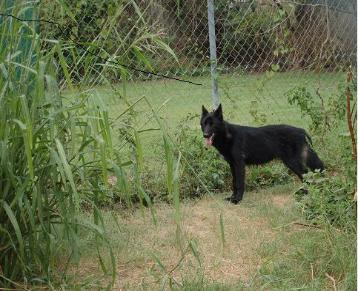
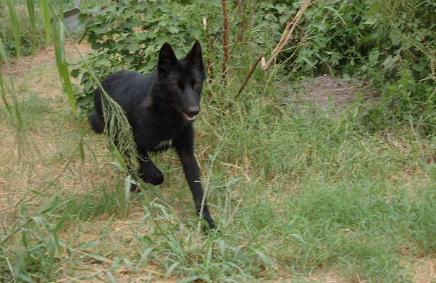
Wolfie is a young female and has some growing to do. She has some British Columbian
bloodlines. She loves to play and has lots of energy. Her previous owner was ill from a long stay in
the hospital and could not raise the pups. Wolfie was less than 4 weeks old when she came to live
with us. We thought she would be a good companion for Alpha who has lived alone for many years.
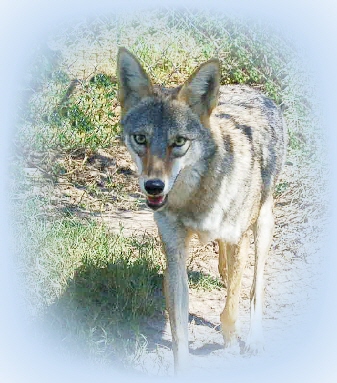
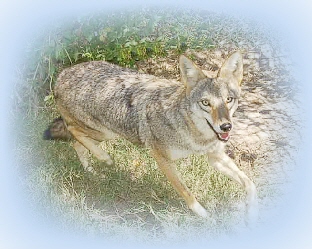
Alpha is a female ,she has been with us for many years. She has a happy-go-lucky
attitude and has quite a fan club of her own. She came from a facility in N.Florida who
could no longer care for her.
Physical attributes
The Eastern Canadian Wolf is smaller than the Gray Wolf. It has a pale greyish-brown pelt. The back and the sides are covered with
long, black hairs. Behind the ears, there is a slight reddish colour. These differences in attributes are thought to be a result of their
Red Wolf ancestry. The Algonquin wolf is also skinnier than the Grey Wolf and displays a coyote-like appearance. This is because
wolves and coyotes often mate and breed hybrid wolf/coyote pups in the park. The Canadian Parks and Wilderness Society states:
"Hybridization with coyotes has historically been a precursor to the decline of Eastern wolf populations. The Committee on the Status
of Wildlife in Canada (COSEWIC) has identified hybridization with coyotes as one of the major threats facing the Eastern wolf, and
hybridization continues to pose a serious challenge to red wolf recovery efforts in North Carolina." Because the two animals looks so
much alike, a ban on the hunting of Algonquin wolves and coyotes has been in place to make sure no accidental deaths occur.

Grey wolves will attack, kill or drive out coyotes if they find them, but recent studies by John and Mary Theberge suggest that
Algonquin red wolf males mate and accept coyote females. John Theberge states that, because coyotes are smaller than wolves, that
female wolves would be less likely to accept a smaller mate.

Range
The Eastern Canadian Wolf mainly occupies the area in and around Algonquin Provincial Park in Ontario, and also ventures into
adjacent parts of Quebec, Canada. It also may be present in Minnesota and Manitoba. In the past, this species might have ranged
south into the United States, but after the arrival of Europeans, these wolves were heavily persecuted and became extirpated from the
United States. In Canada, exact numbers of Eastern Canadian Wolves are unknown.

In Algonquin wolves often travel outside the park boundaries, and enter farm country where some are killed. "Of all the wolf deaths
recorded from 1988 to 1999, a minimum of 66% was caused by humans. Shooting and snaring outside park boundaries were the
leading causes of death for wolves radio-collared in Algonquin Park" (Theberge 1998, CBSG 2000). One wolf that was radio-collared
in July 1992 was located in October in Gatineau Park (north of Ottawa), which is 170 km from Algonquin Park. By mid-December it had
made its way back to Algonquin ,and then, in March 1993, this wolf's severed head was found nailed to a telephone poll in Round
Lake by someone who hated wolves.
Diet
The Eastern Canadian Wolf preys on White-tailed Deer, Moose, lagomorphs, and rodents including beaver, muskrat, and mice.
Preying on American Black Bear was also reported. Studies in Algonquin Provincial Park showed that three species accounted for
99% of the wolves's diet: Moose (some of which is scavenged), White-tailed Deer, and Beaver (ca. 33% each). The wolves tend to
prey more frequently on American Beaver in the summer, and on White-tailed Deer in the winter. (reference needed).
References
Banfield, A.W.F. 1974. The Mammals of Canada. University of Toronto Press.
Reid, F.A. 2006. Field Guide to the Mammals of North America north of Mexico. Fourth Edition. Houghton Mifflin. New York.
Retrieved from "http://en.wikipedia.org/wiki/Eastern_Canadian_Wolf"