Copyright © 2007,Genesis Zoological Center Inc.
Pictures of the animals that are on display at the Center.
Below are pictures of some of the animals that are on display at the Center during the weekend. If you
"
Click" on the animals name/speices you will be taken to a page that will have a more detailed description about
them and there species. If you have any questions please feel free to email them to us.
Chinese Leopard
Czar: White Siberian Tiger.
Misha: Florida Panther
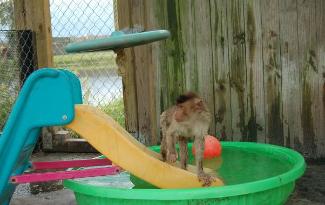
Adam: Pig Tailed Macaque
Our Animals
Genesis Zoological Center Inc.

Bo: Florida Panther
Wolfie: Wolf
Iberia: Amur Leopard
                                                                  Glossary of Terms
Allotype
A specimen designated from the type series that is the opposite sex of the holotype.
Available name
A name that is correctly proposed according to the International Code of Zoological Nomenclature. An available name is not
necessarily the valid name.
Category
Any rank within the classification hierarchy, e.g., family, subfamily, subspecies.
Change of rank
When a name is moved from one level of the classification system to another, e.g., when De Lotto (1955) moved Ceroplastes
destructor brevicauda from the subspecies to the species rank C. brevicauda this was a change of rank.
Classification
A system of nested hierarchical categories used to efficiently store information about the diversity of life.
Classify
To place a taxon in a classification system.
Cotypes
A term no longer recognized in the International Code of Zoological Nomenclature; synonymous with syntypes.
diurnal animal (dī-ŭr'nəl) is an animal that is active during the daytime and sleeps during the night. Animals that are not diurnal are
either nocturnal (active at night) or crepuscular (active primarily during twilight). Many animal species are diurnal, including many
mammals and birds. The diurnal pattern is controlled by the circadian rhythm of the animal. Some mainly nocturnal or crepuscular
animals have been domesticated as pets and have changed into diurnal animals to coincide with the cycle of human life. Examples
are pet dogs and cats, which are derived from the wolf and the wild cat. However these animals may revert to their original behaviour
when they are born feral.
Emendation An intentional change to a previously proposed name, e.g., Lindinger proposed the emendation Hemiberlesea for the
armored scale Hemiberlesia indicating that it was originally improperly formed.
Holotype
A specimen that serves as the standard bearer of a species or subspecies name.
Homonym
One of two or more scientific names that are identical but pertain to different organisms, e.g., Eriococcus mancus Ferris, 1955 and
Eriococcus mancus (Maskell, 1897); Onceropyga Ferris, 1955 and Onceropyga Turner, 1904.
Incertae sedis
A name of uncertain identity.
Junior homonym
If there are only two homonyms, the junior homonym is the most recently described homonym; if there are more than two homonyms,
the junior homonyms are all but the oldest described homonym which is the senior homonym, e.g., Eriococcus mancus Ferris, 1955 is
the junior homonym and Eriococcus mancus (Maskell, 1897) is the senior homonym.
Junior synonym
If there are only two synonyms, the most recently described one is the junior synonym; if there are more than two synonyms, the
junior synonyms are all but the oldest described one which is the senior synonym, e.g., Apiomorpha nux Fuller, 1896 is the junior
synonym and A. pharetrata Scharder, 1863 is the senior synonym.
Justified emendation
An emendation that is correct according to the International Code of Zoological Nomenclature, e.g., the name susani is proposed as a
patronym for a woman named Susan; according to the Code the name must be changed to susanae and is a justified emendation.
Lectotype
A specimen chosen as the standard bearer of a species or subspecies and selected from the syntype series.
Misidentification
A citation of a name in the literature that used the incorrect name because the specimens were improperly determined.
Misspelling
A citation of a name in the literature that is incorrectly spelled.
Native Species
Wildlife that is originally from this area.
Neotype
A specimen chosen as the standard bearer of a species or subspecies name for which none of the original type specimens exist.
New combination
When a species is transferred to a different genus for the first time.
Nomen nudum
A name that does not fulfill the criteria set by the International Code of Zoological Nomenclature as a legally described scientific name
and therefore cannot be used unless it is subsequently proposed correctly.
omnivore (from Latin: omne all, everything; vorare to devour) is a species of animal who are "... generalized feeders, with neither
carnivore nor herbivore specializations for acquiring or processing food, and who are capable of consuming and do consume both
animal protein and vegetation."
Paralectotype
All of the specimens in the syntype series of a species or subspecies other than the lectotype.
Paratype
All of the specimens in the type series of a species or subspecies other than the holotype.
Replacement name
A name that is assigned to replace a name that is a junior homonym, e.g., Onceropyga Turner, 1904 is the valid name and
Onceropyga Ferris, 1955 is the junior homonym and must be replaced; Hoy (1963) proposed the replacement name Oregmopyga.
Senior homonym
The oldest described homonym, e.g., Onceropyga Turner, 1904 is the senior homonym and Onceropyga Ferris, 1955 is the junior
homonym.
Senior synonym
The oldest synonym, e.g., Apiomorpha pharetrata Scharder, 1863 is the senior synonym and A. nux Fuller, 1896 is the junior
synonym.
Synonym
One of two or more scientific names that are spelled differently but refer to the same organism, e.g., Apiomorpha nux Fuller, 1896 and
A. pharetrata Scharder, 1863 are names used for the same species of eriococcid and are synonyms.
Synonymy
A section of a systematic presentation about an organism that lists all of the names that have been used for the organism including
synonyms, new combinations, misidentifications, etc. In some cases this section may include only true synonyms.
Syntypes
The series of specimens used to describe a species or subspecies when the author did not include a holotype.
Systematics
The field of science dealing with the diversity of life and the relationships of life's component organisms.
Taxon
One or more organisms that belong to the same taxonomic unit.
Taxonomy
The field of science that classifies life.
Topotype
One or more specimens collected at the same location as the type series regardless of whether they are part of the type series.
Type
A term used to describe the nomenclatural importance of various kinds of specimens.
Type locality
The geographic location where the primary type was collected.
Type species
A species that has been selected as the standard bearer of a genus or subgenus.
Type genus
A genus that has been selected as the standard bearer of a tribe, family, or superfamily and provides the stem of the family-group
name.
Unavailable name
A name that is incorrectly proposed according to the International Code of Zoological Nomenclature.
Unjustified emendation
An emendation that is incorrect according to the International Code of Zoological Nomenclature, e.g., the generic name Hemiberlesea
Lindinger is an incorrect change of Hemiberlesia Cockerell according to the Code and is an unjustified emendation.
Valid name
The correct name of an organism, e.g., if Apiomorpha nux Fuller, 1896 and A. pharetrata Scharder, 1863 apply to the same species
(and therefore are synonyms), then by the law of priority (the oldest name prevails) A. pharetrata Scharder, 1863 is the valid name.
Alpha:Wolf
Lemurs
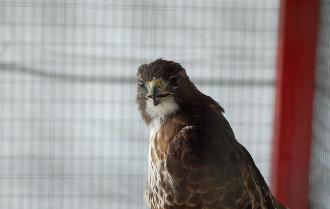
Keeya: Permanently injured Red
shoulder hawk.
Toby, the African spur thigh
Sara, The Baboon.
Penny
Porker

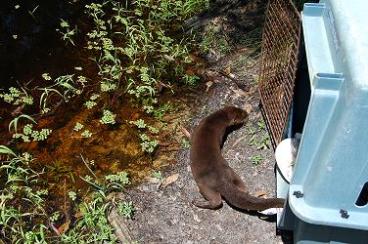
Rehab & Release
Click below to see some success stories.
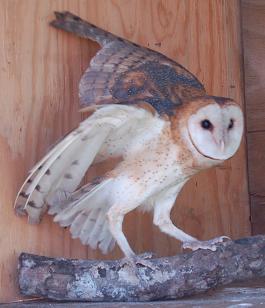
Barney the barn owl
Kalissa: Siberian Tiger